
As the year comes to an end, many people pause and look at the practical parts of life. Not dramatically. Just carefully. Is everything in order. Is there something important that has been pushed aside for too long. Healthcare often falls into that category. Most of the time, it works quietly in the background. Then, suddenly, it matters.
For foreigners living in Hungary, healthcare in Hungary can seem simple at first and confusing later. From my experience, healthcare in Hungary for foreigners is not something to fear, but it does need explanation. The system works differently from what many people know at home. Because of this, expectations do not always match reality.
As we move into 2026, it helps to look at healthcare in Hungary in a practical way. Not to create concern. Not to focus on rules. But to understand how things work when you actually need care.
Public and private healthcare in Hungary
Hungary has a public healthcare system that covers essential medical services. This includes emergency care, general practitioners, specialist treatment and hospital care. For Hungarian families, this system is familiar. They know where to go and what to expect.
For foreigners, the challenge is usually not eligibility. It is access. It is timing. And it is communication.
In the public system, people often wait weeks for specialist appointments or diagnostic tests. In some areas, there are simply not enough doctors. Many healthcare professionals speak English, but this is not guaranteed. Administrative steps can also feel confusing if you have not grown up with the system.
Because of this, many foreigners turn to private healthcare. Private clinics work alongside the public system. They usually offer faster appointments, organised diagnostics and support in English. For most foreigners, this choice is not about better treatment. It is about care that feels clearer and easier to manage.
The TAJ card: important, but not complete
The TAJ card is a fundamental part of healthcare in Hungary. It confirms enrolment in the public healthcare system and provides access to state-funded medical services. In 2025, the monthly contribution increased to approximately 10,000–12,000 HUF, depending on individual circumstances.
What TAJ does well is provide a safety net. Emergency care, basic treatment and hospital services are covered.
What TAJ does not guarantee is speed, flexibility or language support. A TAJ card does not shorten waiting lists, does not give access to private clinics, and does not usually include preventive screenings beyond the basics.
This is where misunderstandings often arise. Many foreigners assume that once they receive a TAJ card, their healthcare is fully arranged. In reality, TAJ is a foundation, not a complete solution.
How foreigners use healthcare in everyday life
In practice, most foreigners (and Hungarians) in Hungary use a combination of public and private care.
Public healthcare is often used for emergencies, prescriptions or straightforward issues. When specialist care or diagnostic tests are needed, private clinics are frequently chosen. The reasons are usually practical.
A private specialist visit in Budapest typically costs between 25,000 and 50,000 HUF, and additional tests can increase this quickly. Without insurance, these expenses are paid per visit. With private health insurance, care is organised and covered within the policy, which brings predictability.
Another important factor is communication. Being able to clearly explain symptoms and fully understand medical advice can make a significant difference, especially in stressful situations.
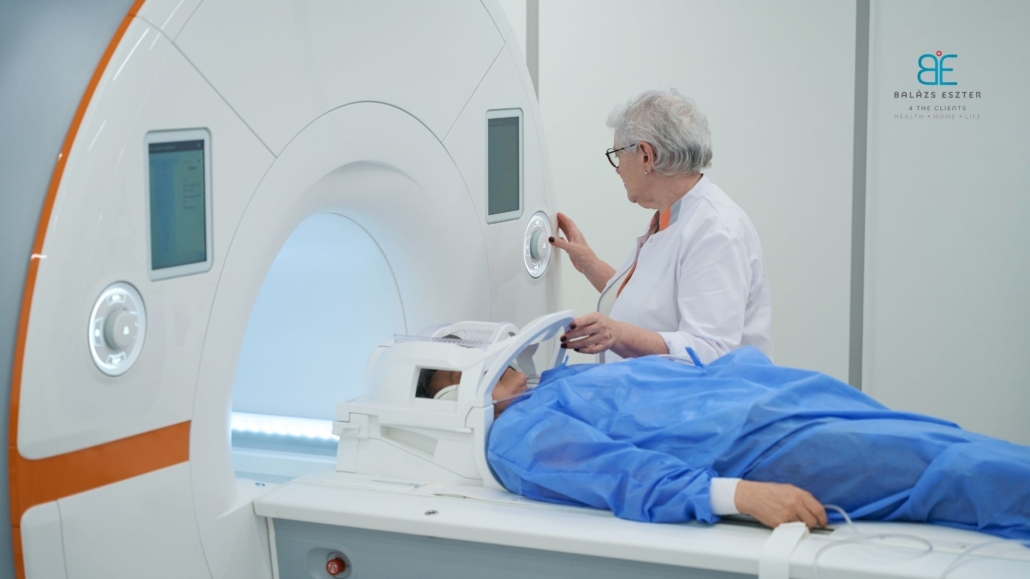
Private healthcare in Hungary often includes fast access to diagnostic imaging such as MRI scans.
Where private health insurance fits in
Private health insurance in Hungary is best viewed as a practical support tool. It does not replace the public system, but it complements it.
Well-structured private health insurance typically focuses on outpatient care. This includes specialist consultations, diagnostic tests such as CT or MRI, laboratory work, physiotherapy and preventive screenings. One of the greatest benefits is coordination. Appointments are arranged, diagnostics are organised, and patients are guided through the process.
It is also important to understand the limits. Accident insurance, student insurance and travel insurance all serve different purposes. They are not interchangeable, and none of them replace comprehensive health cover.
Domestic private care and international health insurance
There is often confusion between private healthcare within Hungary and international health insurance.
Domestic private care is designed for treatment in Hungary. It is well suited to people whose main residence is here and who want reliable access to doctors and diagnostics without long waiting times.
International health insurance serves a different purpose. Medihelp operates as a specialist partner providing international private health insurance, extending coverage beyond Hungary. This type of insurance is particularly relevant for people who travel frequently, live across borders or want access to treatment abroad for more complex conditions.
These are not competing options. They are different tools designed for different lifestyles.
Common healthcare misunderstandings among foreigners
Certain patterns appear repeatedly.
People delay thinking about healthcare until something happens. Others rely on EHIC cards or travel insurance long after settling in Hungary. Some move between public and private systems without understanding how they connect.
Most of these situations do not come from carelessness. They come from assumptions. Healthcare systems differ from country to country, and Hungary is no exception.
What Generali healthcare solutions actually offer foreigners
When people hear “private health insurance”, they often imagine a single product. In reality, Generali offers several distinct types of healthcare-related cover, each designed for a different situation. Understanding these differences is important, because choosing the right type of cover depends on how you live in Hungary.
Below is a practical overview of the main healthcare-related solutions Eszter works with, explained in plain language.
Overview of Generali healthcare options in Hungary
| Type of cover | What it is designed for | What it typically includes | Who it suits best |
|---|---|---|---|
| Private Care Health Insurance | Day-to-day private medical care in Hungary | Specialist consultations, diagnostics (CT, MRI), lab tests, physiotherapy, one-day surgery, preventive screenings, flu vaccinations, organised appointments, no waiting lists | Anyone living in Hungary who want fast, predictable access to care |
| In-Clinic / Acute Care Cover | Serious or unexpected medical situations | Hospital treatment, surgeries, rehabilitation, oncology diagnostics, advanced imaging, rapid investigations | Those who want strong protection for major health events |
| Accident Insurance | Financial protection after accidents | 24/7 accident cover, fractures, disability benefits, hospital daily allowance, rehabilitation support | Anyone wanting additional protection for accidents at home, work or travel |
| Life, Accident & Health Combined Cover (TestŐr) | Financial stability during illness or incapacity | Lump-sum payouts for serious illness, disability cover, income replacement, accident benefits | Families or individuals wanting broader financial security |
| International Health Insurance (via Medihelp) | Private healthcare outside Hungary | Worldwide hospital and specialist care, high-limit inpatient coverage, oncology and transplant treatment | People who travel frequently or live between countries |
Each of these solutions serves a different purpose. They are not interchangeable, and they are often combined thoughtfully rather than chosen alone.
A note on choice and care
One of the most important parts of Eszter’s work is helping clients understand what they actually need, not what sounds reassuring on paper. Healthcare decisions are personal. They depend on age, family situation, work, travel habits and long-term plans.
Good insurance is not about fear. It is about reducing uncertainty and protecting quality of life.
FAQ: Healthcare in Hungary for Foreigners (2026)
1) Does the TAJ card cover healthcare in Hungary for foreigners?
Yes, in many cases. TAJ enrolment gives you access to Hungary’s public healthcare system, including GP care, referrals, and state hospitals. However, TAJ does not guarantee fast appointments, English-speaking care, or modern “customer service” style support. In practice, many foreigners use TAJ as their safety net and then choose private care for faster access.
2) If I have TAJ, why would I still use private care?
Because TAJ mostly answers the question “Am I covered?” while private care answers the question “Can I get care quickly, in a way I understand?” Most foreigners choose private care for speed, clear communication, and organised diagnostics. They do not do it because Hungary is unsafe. They do it because waiting weeks for a specialist is difficult when you work, have children, or simply feel unwell.
3) Can I go to a private clinic in Hungary without insurance?
Yes. Private clinics accept self-paying patients. The risk is cost creep. One appointment is manageable. Several appointments, lab tests, and imaging can become expensive very quickly. This is why many people choose private health insurance, so they do not pay each time they need care.
4) What does “private health insurance” usually cover in Hungary?
It depends on the product, but strong private health cover typically focuses on outpatient care, such as specialist consultations, diagnostics, lab work, and treatment coordination. Many policies also include preventive screenings and physiotherapy. Some solutions focus on domestic private care in Hungary, while others extend cover internationally for people who travel or live between countries.
5) What is the difference between private care in Hungary and international health insurance?
Private care in Hungary focuses on treatment within Hungary, usually through a network of partner clinics. International health insurance focuses on access abroad and higher-limit inpatient coverage. International cover is most relevant if you travel frequently, live between countries, or want treatment options outside Hungary.
6) Is EHIC enough for healthcare in Hungary if I live here?
EHIC can help in specific circumstances for EU/EEA visitors, but it is not a long-term healthcare plan for residents. Many foreigners get caught out by assuming EHIC works like full healthcare cover. If you live in Hungary, you usually need a Hungary-based solution (such as TAJ, and often additional private cover).
7) How do I find an English-speaking doctor in Hungary?
In private clinics, English-speaking care is much easier to arrange, and booking support is often available in English. In the public system, you may find English-speaking doctors, especially in Budapest but availability varies. Clinics such as FirstMed operate as private healthcare provider and if language clarity matters to you, private clinics usually provide a more reliable experience.
A calm way to approach healthcare in 2026
Hungary’s healthcare system is not perfect. However, it does work when people understand how to use it. The key lies in knowing which part of the system supports you at which moment.
For many foreigners, the most balanced approach remains straightforward. Public healthcare through TAJ creates an essential safety net. At the same time, private health insurance brings speed, clarity and comfort into everyday medical situations. Together, these two layers reduce stress and remove the pressure of last-minute decisions.
As a new year begins, healthcare does not require dramatic changes. Instead, it benefits from early and calm consideration, before support becomes urgent. When plans are in place, people can focus on their health rather than on navigating systems.
For customised insurance advice in Hungary, reach out to Eszter Balázs at 4TheClients. Since 2005, she has served as a senior financial consultant for Generali Biztosító Zrt., a trusted market leader founded in 1832. She supports private and corporate clients with personalised insurance solutions, guided by care, responsibility and long-term thinking.
Staying connected through real conversations
In October 2025, I had the pleasure of taking part in a live healthcare information event in partnership with HOW TO HUNGARY. The focus was not on selling products, but on answering real questions from foreigners living in Hungary. Questions about access, expectations, and how the healthcare system works in everyday life.
What stood out most was how many people shared the same concerns. They were not looking for dramatic solutions. They wanted clarity, reassurance, and practical guidance from someone who understands both the system and their situation.
Because of the strong interest and the quality of those conversations, we are already planning another live healthcare-focused event in 2026. These sessions are about education and connection, and they reflect how I prefer to work: openly, carefully, and with time for real discussion.
Healthcare decisions should never feel rushed or confusing. They deserve space, context, and human conversation.